Copyright © Sullivan Wright All Rights Reserved


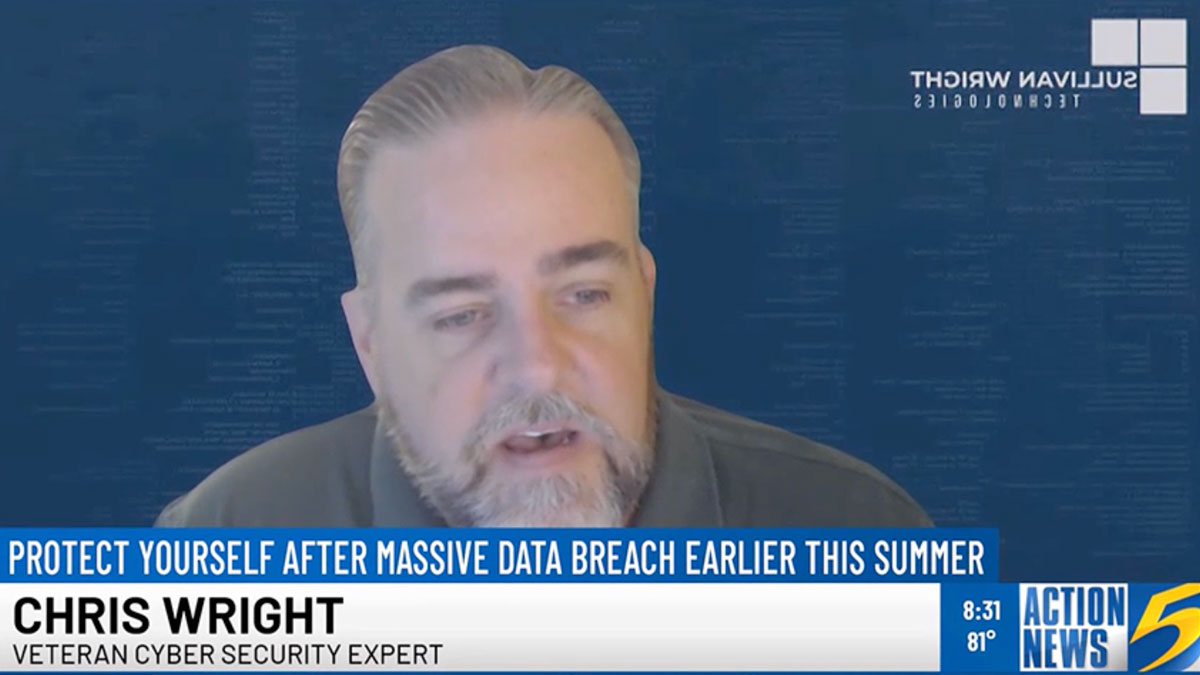
Following a massive data breach, Sullivan Wright Technologies’ co-founder and partner, Chris Wright, joined the Action 5 News Digital Desk to share his insights about data breaches in the healthcare sector. According to the U.S. Department of Health and Human Services, 2024 was yet another record year for the number of reported data breaches and records breached. During the interview, Chris shared how viewers can safeguard their data from future incidents:
Healthcare forms often request a large amount of personal information, but not all of it is needed. Start by completing only the fields clearly marked as required and question anything that feels excessive or unrelated to your care. If a form labels a field as required but you don’t understand why the information is needed, it’s okay to ask whether it is truly required.
Enable multi-factor authentication (MFA) on patient portals, email accounts, and financial services. MFA adds an extra layer of protection against unauthorized access.
Criminals can piece together personal details shared on social media or across multiple platforms to steal identities. Reducing your overall digital footprint makes you a harder target.
It’s easy to rush through paperwork, especially in healthcare settings, but take time to review agreements. Pay close attention to consent language, especially around data sharing and marketing.
In healthcare, some data uses require explicit opt-in while others are opt-out, and the distinction isn’t always clear. Make sure you’re not unintentionally consenting to marketing or data sharing you don’t want.
Sharing less information overall—both with providers and online—can significantly reduce your risk over time. It’s a habit that takes effort to build, but it’s worth it.